
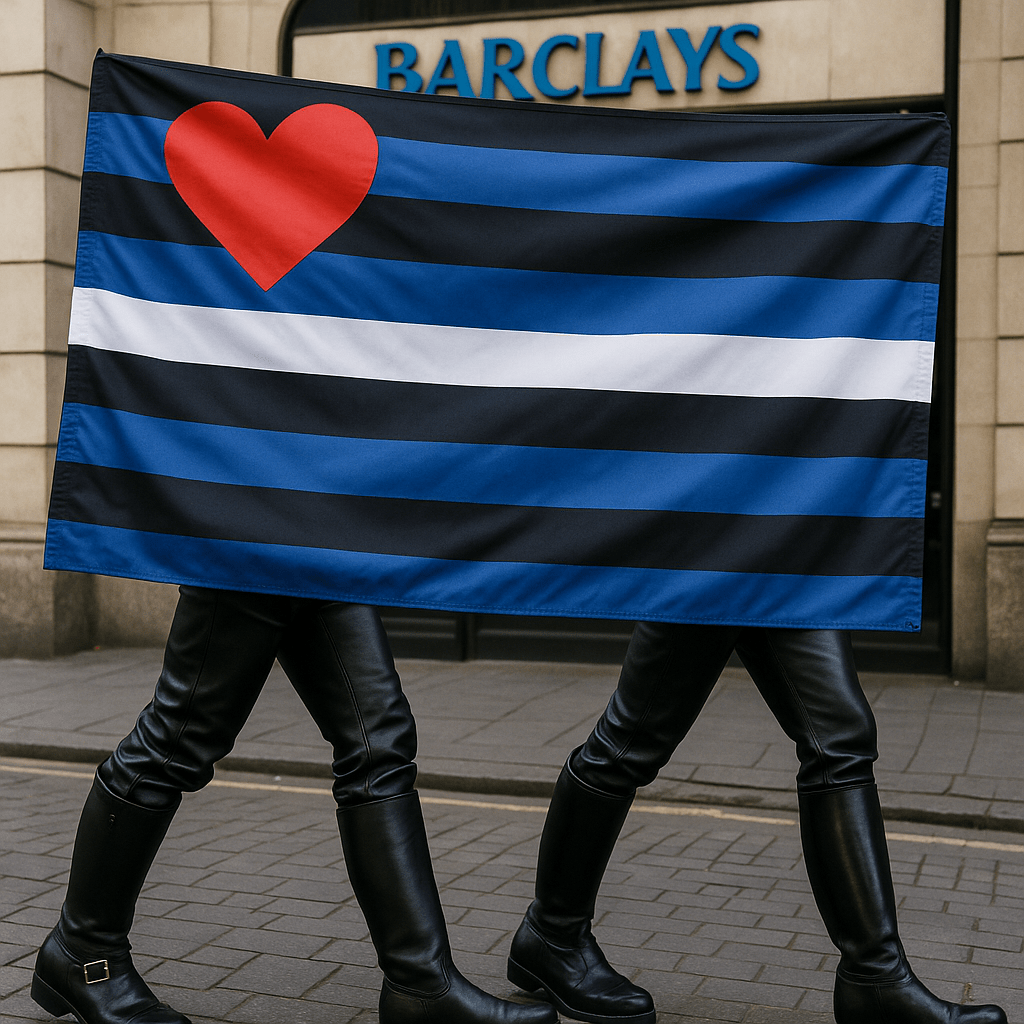
Once upon a time, our place in Pride wasn’t up for debate. The leathermen of the UK were there in full gear, marching not just in solidarity with the LGBTQ+ movement but as its very muscle and memory. Today, we find ourselves under fire from a new kind of erasure: calls to “clean up” Pride, to make it more palatable for the mainstream, and to exile kink from the streets. But this backlash isn’t new. It’s simply shame dressed in rainbow. And we’ve seen it before.
To understand our right to be visible, loud, and unapologetically leatherman, we must go back to where it began.
The UK leather scene traces its roots to post-war motorcycle culture, where closeted gay men found freedom and fraternity in biker clubs. London’s Sixty Nine Club, founded in 1965, was the first of its kind in Europe, a covert but vital space where gay men could be their full, leather-clad selves. These were not sanitized, family-friendly times. They were dangerous. Being gay was criminal. Being visibly gay was unthinkable. But these men did it anyway.
Throughout the ’70s and ’80s, UK leathermen carved out spaces in bars like The Coleherne and clubs under the Motor Sport Club (MSC) umbrella. They held socials, contests, and supported one another through the AIDS crisis. Their culture was not a footnote to gay liberation; it was part of its engine. The black leather, the harnesses, the handkerchief codes all became symbols of resistance as much as expressions of sexuality. Pride, when it emerged, was a march against invisibility. And leathermen were right there, boots pounding pavement.
Fast-forward to today, and a new generation, emboldened by corporate sponsorship and sanitized PR campaigns, claim that leather has no place at Pride. That kink, BDSM, or gear may “confuse the children.” That we must make ourselves digestible to appease straight onlookers. But let’s be clear: these arguments echo the same respectability politics that once told us to stay quiet, to blend in, to hide.
This is not about protecting children. It’s about protecting comfort. It’s about reintroducing shame into a movement that was supposed to kill it.
Our gear is not just fetish wear. It is history. It is grief. It is love. It is survival.
Leathermen represent more than aesthetics. We carry the stories of ex-servicemen who couldn’t be out, of lovers lost in the epidemic, of bars built when it was illegal for two men to dance together. We represent consent culture before it was a hashtag. Brotherhood before it was a slogan. Our presence is not optional, nor should it be relegated to after-dark or behind closed doors.
We are the evidence that queer desire doesn’t need to be polite to be valid. That visibility means all of us, not just the marketable ones. And that Pride, real Pride, must hold space for transgressiveness, for difference, for those whose queerness is still inconvenient.
And let us not rely on those who never truly had our back. The inconsistency of global corporations in supporting Pride is a lesson in caution. These same companies that wrap their logos in rainbows each June are just as quick to pull funding, disassociate, or go silent when the political climate turns. In the United States, the rise of Trumpian politics and the backlash against diversity, equity, and inclusion (DEI) initiatives has sent a clear message: queer rights are negotiable when profit or public opinion demands it. And here at home, the cancellation of Liverpool Pride due to lack of funding laid bare what happens when sponsorship dries up, our visibility is the first to go. This is why collective presence matters more than ever. In the absence of money, we must show up with bodies, with boots, with pride. We must resist the sanitisation of our movement not just in words but in presence. Pride began as a protest, not a product. When the floats stop rolling, our feet must still march.
To my fellow UK leathermen: don’t shrink. Don’t de-gear. Don’t let the rainbow-washed shame merchants write you out of history. Your boots have marched this ground before. They will again. Pride is not about respectability. It is about resistance. Show up in full leathers. Educate those who don’t know our legacy. And remind them: we were here before Pride was safe, and we will be here long after the sponsors pack up.
In every squeak of leather, in every creak of boots, there is defiance. There is Pride.
Let no one take that from us.
 BlufBear
Leave a comment