

There’s a moment in childhood many queer people remember, not always consciously, but it lives in the body. For me, it was the day I realised I was being watched. Not just looked at, but read. Assessed. Scrutinised. I had no name for it, but I understood the consequences. If I moved the wrong way, laughed too loudly, or looked too long at the wrong boy, I risked exposure. And exposure, I knew, would mean shame.
I was born in 1980. I grew up in Thatcher’s Britain, under the long, choking silence of Section 28, that infamous clause banning the “promotion” of homosexuality in schools. Around me, the world was starting to whisper the word AIDS, and always in the same breath: plague, punishment, perversion. We weren’t shown positive representations of queer lives; we weren’t shown at all. When I searched for myself in the world, all I saw were gaps.
In that silence, shame bloomed.
I remember being seven or eight, maybe younger. I loved to dance. English country dancing, to be specific, all skipping and clapping and patterned movement. It was the only form of exercise I actually enjoyed. One day at school, I asked my mum if I could join the after-school dance club. My teacher, Mrs Knox, stood beside me, smiling. Mum said yes. I was thrilled; it felt like permission to do something I genuinely loved. But that evening, at home, she pulled it back. “You don’t want people thinking you’re a sissy,” she said. “What would your dad think?” My dad wasn’t absent, just distant. But the message landed. I didn’t go to the club. I stopped dancing. And maybe that’s where the shame first took root: in that quiet correction of joy. That moment when being perceived as doing something beautiful became a risk. I learned that to be seen was to be judged, and that safety lay in not asking twice.
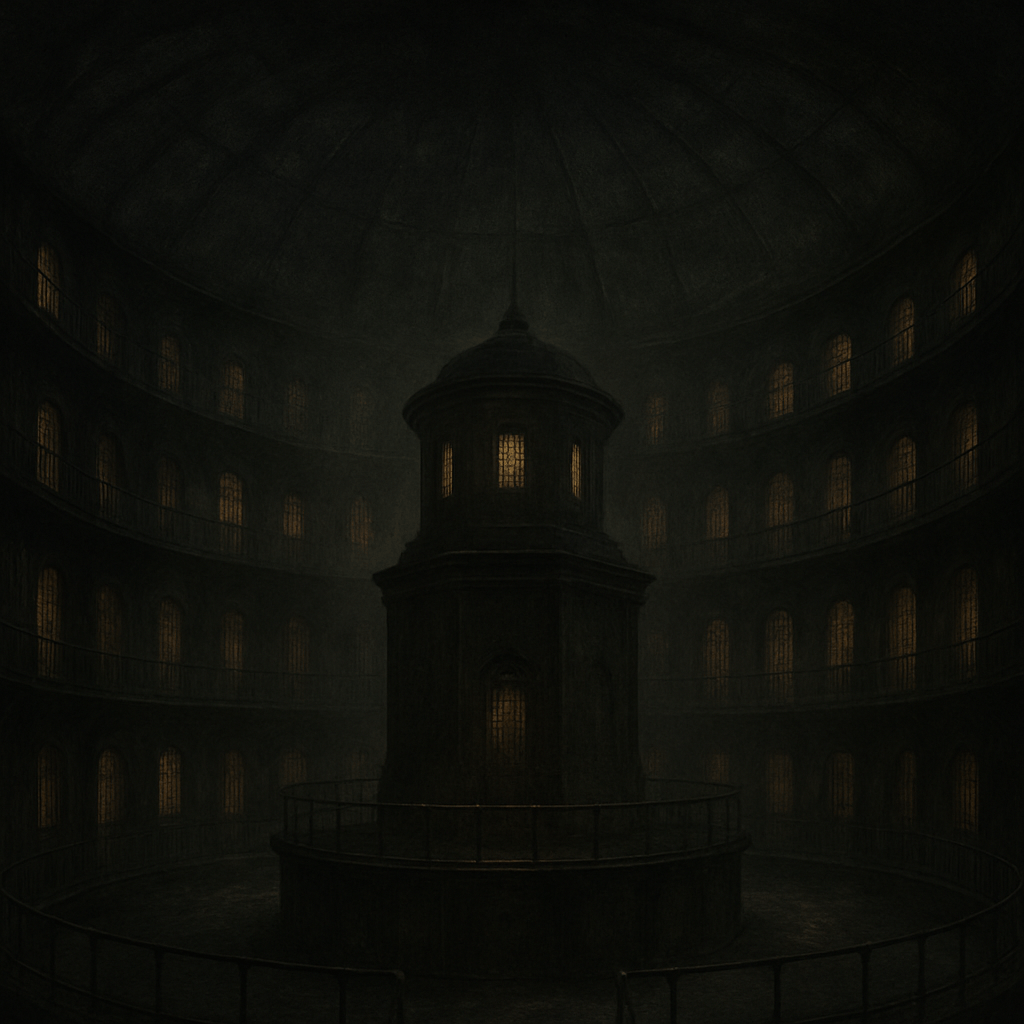
Philosopher Michel Foucault described a prison called the panopticon, a structure where all prisoners are watched from a central tower, but they can’t see whether they’re being watched. So they begin to behave as if they are. They internalise the gaze.
“He who is subjected to a field of visibility, and who knows it, assumes responsibility for the constraints of power; he makes them play spontaneously upon himself; he inscribes in himself the power relation in which he simultaneously plays both roles; he becomes the principle of his own subjection.”
— Michel Foucault, Discipline and Punish: The Birth of the Prison (1975)
This, to me, is the closest thing to describing what it felt like growing up gay.
We were not just watched, we watched ourselves. We monitored our hands, our hips, our voice.
We became our own guards.
We edited ourselves in real time.
I wasn’t raised in a religious cult. I wasn’t kicked out of my house. I didn’t even come out until I was 21. But that’s the insidious part: no one had to tell me I was wrong. The culture had already told me everything I needed to know.
And I believed it.
Shame, I’ve learned, makes you small. It shrinks your voice and stiffens your body. But worse, it makes you dangerous, not to others, but to yourself, and to people like you. I began to judge other boys who were like me, but who didn’t hide it. The flamboyant ones. The camp ones. The boys who hadn’t learned to flinch. I hated them, I told myself. But I hated them because they hadn’t caved, and I had. It’s a cruel trick of queer shame: it isolates you from the very people who might save you.
That shame followed me into adulthood, trailing behind me like smoke. Even once I’d come out. awkwardly, nervously, well into my twenties, I never really shed it. I still moderated myself in social spaces. Still shrank slightly when someone clocked me too quickly. Still bristled when confronted with other gay men who were more unapologetic than I’d ever allowed myself to be.
Then I found leather. And with it, something even more frightening: freedom.
The first time I saw it, really saw it , was in a gay bar, late at night, dimly lit but charged. The smell of it, the weight, the way it moved on men who weren’t hiding. I loved it instantly. I wanted to touch it, wear it, be in it. I desired the men, yes — but more than that, I desired what they seemed to carry: ease. Presence. The sense that they were unafraid to be fully visible.
But I wasn’t ready for that.
Not then.
The fear hadn’t left me. The old voices, you’ll look ridiculous, you’ll be exposed, what would people think, still echoed too loudly. I couldn’t walk into a leather space and claim that skin, not yet.
So I took baby steps.
I learned to ride a motorcycle.
It wasn’t a conscious strategy at first; it felt like a coincidence, an interest. But in hindsight, I know exactly what I was doing. Wearing leather on a motorbike was safe. It was respectable. It was masculine, even aspirational. No one questioned it. No one looked twice.
On the bike, I could feel the leather against my skin and tell myself it wasn’t about sex or identity. I could ease into it without having to confront what I really wanted. It was, in a sense, plausible deniability, a gateway to something more profound, without the risk of being seen too clearly.
I think a lot of us leathermen take that route. Consciously or not. We find the socially sanctioned version of what we want, and we go through that door. We wear the jacket before the harness. We master the bike before the bar. We ease into visibility through something that still carries masculine weight, so we don’t have to reckon yet with what it might mean to be vulnerable in our desire.
It’s armour, yes. But it’s also rehearsal.
Because here’s the truth: the gear fits differently when you’re not hiding. Leather worn to blend in is not the same as leather worn to be seen. And I think many of us feel that shift the moment it happens, when the jacket stops being a disguise and starts being a declaration.
That moment didn’t happen all at once for me. It was slow. A conversation. A nod. A first step through a dungeon door. A second-hand pair of chaps. A compliment from someone who saw me before I saw myself.
And eventually, I realised the fear hadn’t disappeared, but I’d stopped letting it steer.
That’s what shame steals from you: the right to exist without apology. And if we’re serious about understanding gay mental health, ageing, identity, we have to understand the long, cruel legacy of being perceived. Of living under surveillance. Of never quite knowing when the judgment is coming, but always expecting it.
This isn’t ancient history. These are still the conditions under which many queer people live. We curate ourselves on apps, performing a version of desire we think will be legible. We shrink in care homes, wary of residents or carers who might still think we’re something to be tolerated. We worry about holding hands on the street, even in cities flying rainbow flags from their town halls. We manage ourselves. We negotiate our visibility.
And we don’t always recognise the toll that takes. Chronic stress. Anxiety. Isolation. A body held tight for decades. A soul still flinching from the slap that never landed.
I’ll write more in time about how all of this shapes how we date, how we search for connection in spaces still laced with danger, and how we sometimes turn the panopticon inwards, performing even in our most intimate moments.
But for now, I’ll leave you with this: healing doesn’t begin with pride. It begins with honesty. With acknowledging what we lived through, what we lost, and what we never had the chance to become.
Sometimes healing looks like leather. Sometimes it looks like silence finally broken.
Sometimes it looks like standing in the light, and not flinching.
And sometimes, it looks like writing this.
And letting you see me.
4 responses to “Learning to Be Seen: A Leatherman’s Journey Through Shame, Desire and the Panopticon’s Gaze”
-
Wow. This resonated with me. I have recently found leather and yes I feel so good in it.
LikeLike
-

[…] perceived. On Blufbear.com, I’ve written about queer shame, about the scars of growing up under a panopticon of heteronormativity. But this year, as I sat reading the responses to a local news post celebrating Pride, I felt […]
LikeLike


 BlufBear
Leave a reply to Facebook Hate Won’t Rain on My Parade: Northern Pride 2025, Leather Loathing Lesbians, and Lashings of Leathermen – BlufBear Cancel reply